
A Hundred User Interviews Later: the Lessons
In a Product Manager's day-to-day, the Discovery phase is a fundamental one. Without a real understanding of users' needs, it is impossible to design a truly relevant product. This article explores the lessons drawn from my field experience, focusing on the importance of interviews and active listening to identify friction points and build adapted solutions.
The Evolution of the Role: From Product Owner to Product Manager
At the beginning of my career as a Product Owner, needs came primarily from the top down. Clients would bring a pre-established set of requirements, often dictated by their management, rarely grounded in field reality. Even when user research existed, it was too superficial to capture the real challenges.
As I moved into a Product Manager role, I quickly realized that this disconnect was a systemic problem — and I encountered it across multiple companies, directly or second-hand.
In one of them, a colleague mobilized 3 full sprints (3 devs, 1 UX, 1 PM) to respond to a major client's request. The result: no one, not even the person who asked for it, ever used the feature.
In another, my first question upon joining was: "Where are the summaries of user conversations?" The CEO's answer: there weren't any. My first move was to go and interview the key users — and the surprise was total: the product being built had absolutely nothing to do with the actual needs on the ground.
These experiences, unfortunately common, illustrate the critical importance of going to the source before building anything.
The Method: Understanding Friction to Simplify Tasks
Our goal as Product Managers is to simplify users' lives and daily tasks. To get there, it is essential to put ourselves in their shoes, understand their daily routines, and identify friction points.
At Marion Livraison, for example, I spoke with site owners and foremen. A recurring problem emerged: on construction sites, materials were often missing, forcing costly detours in time and money. After dozens of interviews, a pattern became clear: some companies, especially smaller ones, had no dedicated couriers for this type of need, which impacted their schedules.
It is therefore vital to remain open, listen without preconceptions, and let users explain their difficulties. As Steve Portigal pointed out in his book Interviewing Users, the key is always to return to concrete examples.
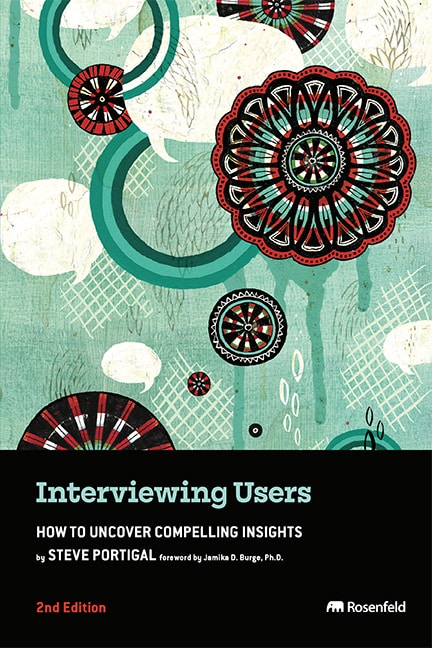
For instance, by asking a foreman about the last time materials went missing on his site, you can precisely understand the resolution steps taken and identify levers for improvement.
Concrete Lessons for Better Practice
A key takeaway is not to steer clients toward a predefined solution. Let them freely describe their friction points, constraints, and expectations. This makes it possible to capture a more authentic reality than preconceived assumptions.
At the same time, it is essential to conduct multiple interviews to identify trends and test these observations early. This approach, although time-consuming, is indispensable for building a product that truly meets needs.
Finally, one last piece of advice: don't trust your ego. Gaining humility, listening more, and assuming less is crucial. As in user experience, the goal is not to reproduce a way of navigating the web, but to understand users' real behaviors.
When developing business products, the opportunity to go on-site remains a powerful lever for embodying users' perspectives and identifying the problems worth solving.