
Escaping the Build Trap: an essential book for product managers
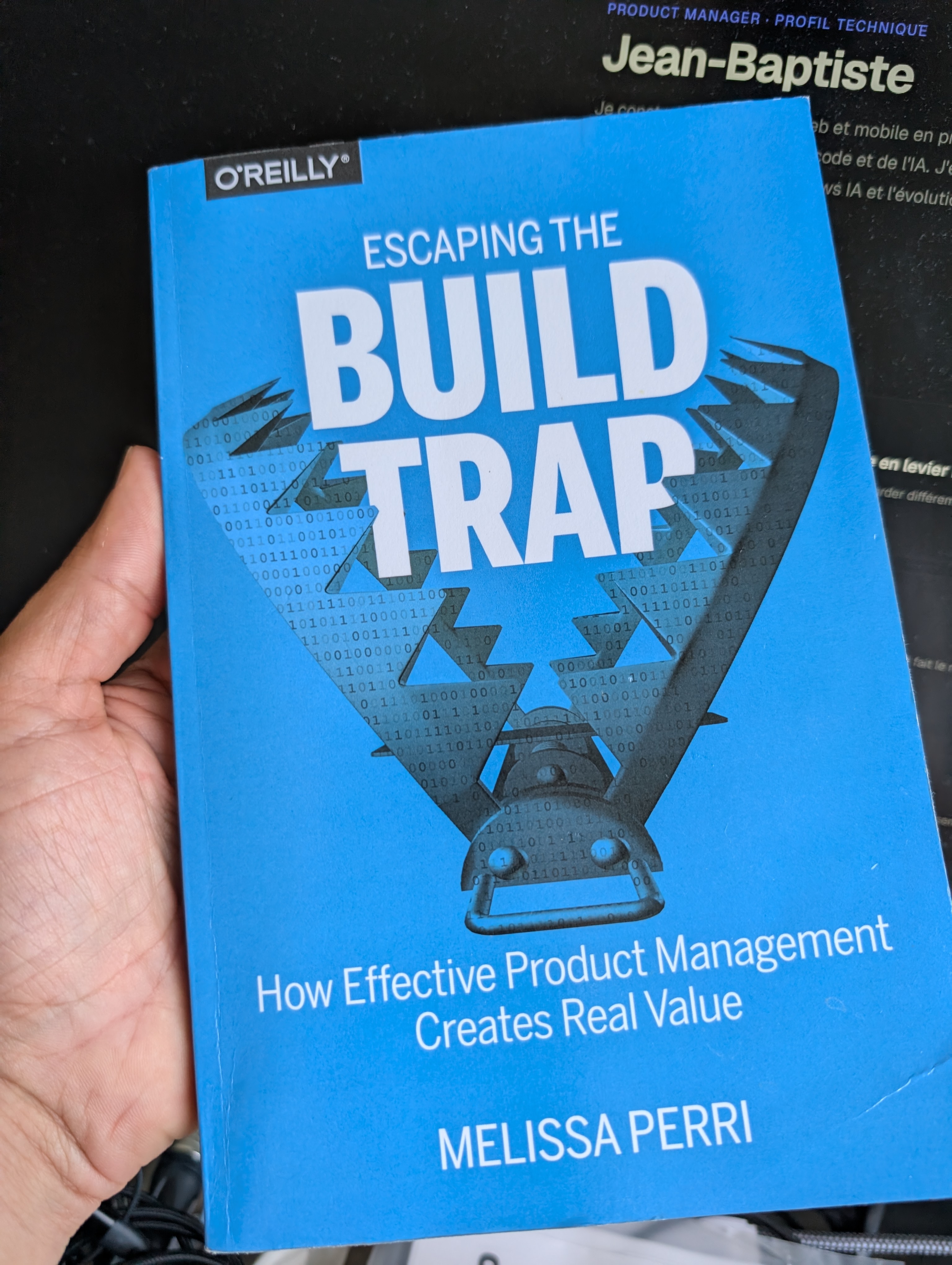
Early in my career as a product manager, one book fundamentally changed how I understood the role: Escaping the Build Trap by Melissa Perri, published by O'Reilly. Published in 2018, it accompanied me through my transition from PO to PM, and it remains as relevant as ever today — especially in the age of artificial intelligence.
A simple idea
The core message of this book is deceptively simple but profoundly true: stop measuring product success by the number of features shipped, and start measuring it by the impact generated for users. This shifts how a product manager should fundamentally approach their work.
Before designing any feature, two essential questions must be asked:
- What pain point does this feature address?
- How will we measure that impact?
These questions are critical in our field, where speed of execution (especially with AI) can make features cheaper to build — but no more relevant. Quantity doesn't guarantee quality, and real success comes from addressing genuine user needs.
Why this book is more relevant than ever
Today, with the explosion of AI and automated tools capable of generating code in minutes, the risk of falling into a "feature factory" mindset is higher than ever. Escaping the Build Trap reframes the product manager's role: it's no longer about shipping, but about understanding, prioritising, and aligning effort with impact.
The book pushes us to refocus on real problems and measure outcomes through KPIs or OKRs, rather than being swept away by technical demands or delivery pressure. This is particularly relevant in an environment where automated tools push for speed, but where real value still rests on empathy and strategy.
An unreserved recommendation
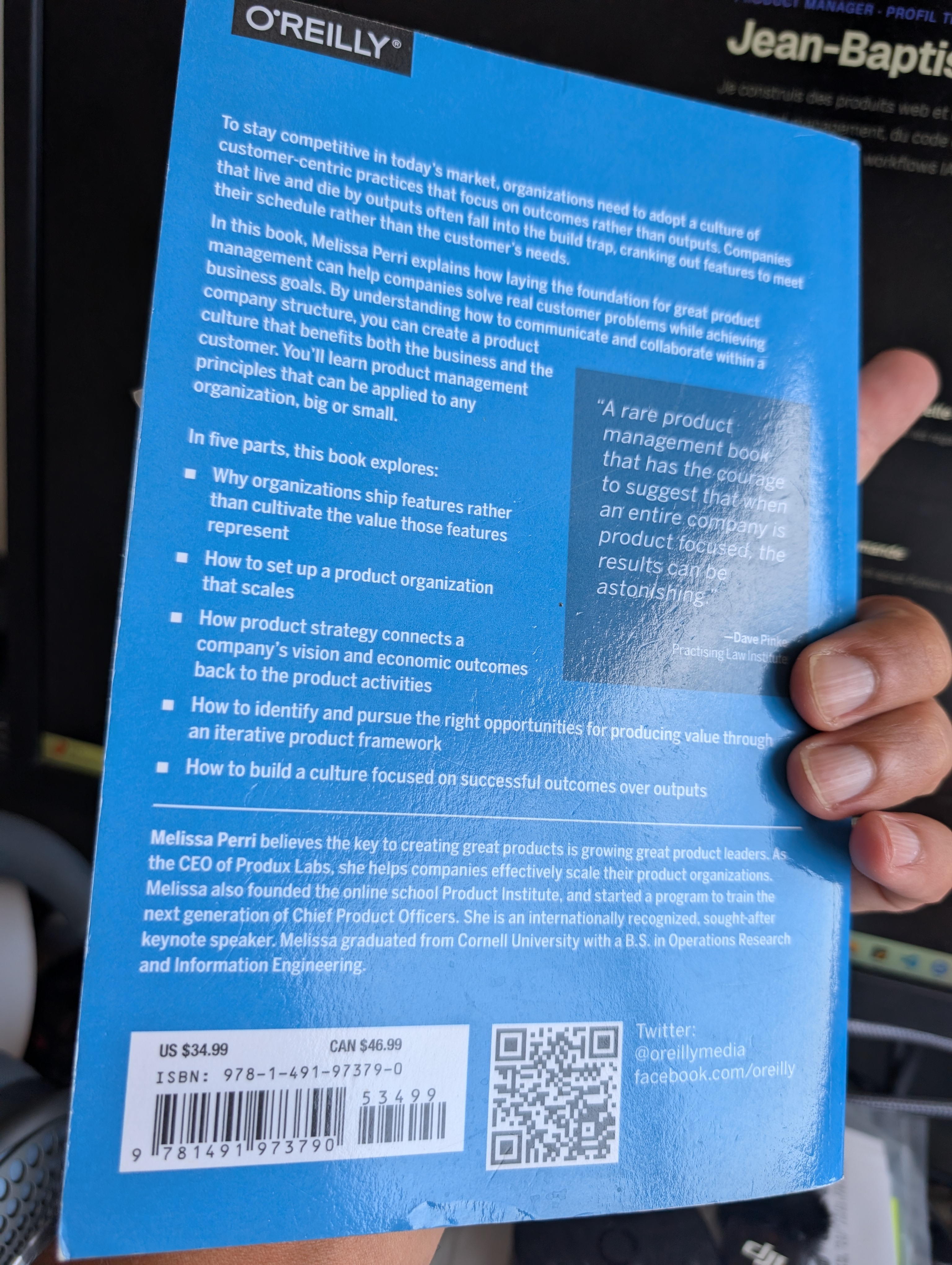
I recommend it without hesitation. The book is a quick read (around 160 pages) and offers rare clarity in a field that is often complex. My rating: 4.5 out of 5 stars. It is essential reading for any beginner or transitioning product manager aiming for impact — and particularly timely in the face of the AI era's challenges.